Meet Inspiring Speakers and Experts at our 3000+ Global Events with over 1000+ Conferences, 1000+ Symposiums and 1000+ Workshops on Medical, Pharma, Engineering, Science, Technology and Business.

Explore and learn more about Conference Series : World’s leading Event Organizer

Conference Series Conferences gaining more Readers and Visitors

Conference Series Web Metrics at a Glance

  • 3000+ Global Events
  • 100 Million+ Visitors
  • 75000+ Unique visitors per conference
  • 100000+ Page views for every individual conference

Unique Opportunity! Online visibility to the Speakers and Experts

PSYCHIATRY MEET 2027

Welcome Message

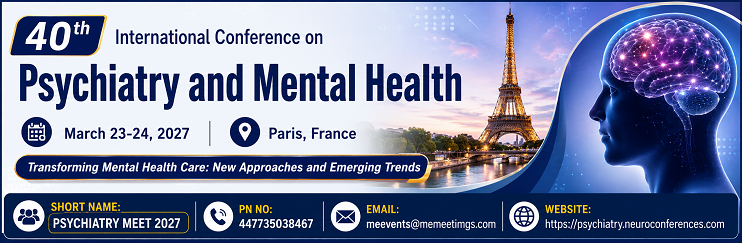
We warmly welcome psychiatrists, psychologists, researchers, academicians, clinicians, mental-health professionals, healthcare providers, and industry experts to the 40th International Conference on Psychiatry and Mental Health, taking place on March 23–24, 2027, in Paris, France. .“Transforming Mental Health Care: New Approaches and Emerging Trends “. The theme emphasizes the transformation of mental-health care through scientific discovery, innovative treatment approaches, technological advancement, early intervention, personalized care, and improved access to psychological and psychiatric services.

The meeting brings together multidisciplinary professionals working across psychiatry, psychology, neuroscience, behavioural health, psychotherapy, addiction, and related areas. The conference will focus on advances in understanding mental disorders, improving diagnosis and treatment, strengthening prevention strategies, and developing accessible and patient- centered mental-health services. Particular attention will be given to emerging technologies, digital psychiatry, artificial intelligence, personalized treatment, neuroscience, and innovative therapeutic approaches.

Target Audience

  • Psychiatrists
  • Clinical psychologists
  • Counseling psychologists
  • Neuropsychiatrists
  • Neuroscientists
  • Psychotherapists
  • Mental-health counselors
  • Psychiatric nurses
  • Social workers
  • Neurologists
  • Addiction specialists
  • Behavioral-health professionals
  • Child and adolescent mental-health specialists
  • Geriatric psychiatrists
  • Researchers and scientists
  • Academicians and professors
  • Healthcare administrators
  • Public-health professionals
  • Pharmaceutical and biotechnology professionals
  • Digital-health and AI specialists
  • Students and early-career researchers.

About the Conference

The 40th International Conference on Psychiatry and Mental Health provides an international platform for discussing contemporary developments in psychiatry and mental health. , taking place on March 23–24, 2027 at Paris, France. “Transforming Mental Health Care New Approaches and Emerging Trends”. It brings together professionals from clinical practice, psychology, neuroscience, research, education, public health, and healthcare services. Participants can explore advances in the diagnosis, prevention, treatment, and long-term management of psychiatric and psychological disorders. The program addresses both established evidence-based approaches and emerging developments that may shape the future of mental healthcare. Modern areas including artificial intelligence, telepsychiatry, digital mental health, neuroimaging, and precision psychiatry will receive attention. The meeting also encourages multidisciplinary interaction between clinicians, researchers, academics, therapists, nurses, and healthcare organizations. Researchers can present findings, exchange ideas, develop collaborations, and gain international exposure for their work. The overall objective is to encourage scientific exchange and support innovative, accessible, compassionate, and evidence-informed mental-health care.

Target Audience

  • Psychiatrists
  • Clinical psychologists
  • Counseling psychologists
  • Neuropsychiatrists
  • Neuroscientists
  • Psychotherapists
  • Mental-health counselors
  • Psychiatric nurses
  • Social workers
  • Neurologists
  • Addiction specialists
  • Behavioral-health professionals
  • Child and adolescent mental-health specialists
  • Geriatric psychiatrists
  • Researchers and scientists
  • Academicians and professors
  • Healthcare administrators
  • Public-health professionals
  • Pharmaceutical and biotechnology professionals
  • Digital-health and AI specialists
  • Students and early-career researchers

Benefits of Attending

Scientific Benefits

  • Learn about emerging developments in psychiatry and mental health.
  • Explore new diagnostic and therapeutic approaches.
  • Discover advances in neuroscience and behavioural research.
  • Gain insights into evidence-based psychological interventions.
  • Learn about digital and technology-enabled mental healthcare.

Professional Benefits

  • Develop international professional connections.
  • Exchange ideas with researchers and clinicians.
  • Identify potential research collaborations.
  • Build relationships with universities, hospitals, and healthcare organizations.
  • Gain exposure to international developments in mental healthcare.

Research Benefits

  • Present original research to an international audience.
  • Receive feedback from researchers and professionals.
  • Increase visibility for academic work.
  • Identify new research directions.
  • Explore opportunities for collaborative publications and projects.

Certificate Benefits

Participants can receive a Certificate of Participation in recognition of their attendance, subject to the conference's certification policy.

Abstract Submission Guidelines – PSYCHIATRY MEET 2027

Submit abstracts through the ABSTRACT SUBMISSION portal.

Abstracts must be written in English (250–300 words) and accompanied by a 100–120-word presenter biography.

Abstract submissions are welcome in all psychiatry and mental-health-related fields, including general psychiatry, depression and anxiety disorders, schizophrenia and psychotic disorders, bipolar and mood disorders, child and adolescent psychiatry, addiction psychiatry, neuropsychiatry, psychotherapy, psychopharmacology, artificial intelligence in psychiatry, digital mental health, personality disorders, trauma and PTSD, geriatric psychiatry, sleep disorders, forensic psychiatry, suicide prevention, community psychiatry, global mental health, behavioral health, psychiatric rehabilitation, and other related disciplines.

Presenting authors should provide:

  • Full Name
  • Institutional Affiliation
  • Country
  • Phone Number
  • Email Address
  • Photograph

Co-authors should provide their full names and institutional affiliations.

All submissions will undergo peer review by the PSYCHIATRY MEET 2027 Scientific Review Committee. Accepted presenters must complete conference registration and pay the applicable registration fee. Please ensure all submitted information is accurate, as it will appear exactly as provided in the conference program and proceedings. Complete your registration using the Online Registration link.

Visa Guidelines – PSYCHIATRY MEET 2027

The organizing committee does not process visa applications but can provide supporting documents, including:

  • Letter of Invitation
  • Letter of Abstract Acceptance
  • Registration Payment Receipt

Official invitation letters will be issued only after successful registration.

Participants may be required to submit:

  • Passport Copy
  • Date of Birth
  • Residential Address
  • Mobile Number
  • Photograph

Sessions and Tracks

Track 1: Psychiatry and Mental Health

Psychiatry and mental health encompass the assessment, prevention, diagnosis, and treatment of a broad range of psychological and psychiatric conditions.This area explores contemporary approaches to understanding mental disorders across different populations and settings. Advances in clinical assessment are supporting earlier identification and more individualized treatment planning. Multidisciplinary care involving psychiatrists, psychologists, nurses, therapists, and social workers is increasingly important. Research into biological, psychological, social, and environmental factors continues to improve understanding of mental illness. The integration of physical and mental healthcare is also becoming increasingly important. Innovative service-delivery models may improve accessibility and continuity of care. The focus remains on improving mental wellbeing, recovery, functioning, and quality of life.

  • Contemporary psychiatric practice and diagnosis
  • Integrated mental-health care
  • Recovery-oriented psychiatric services

Track 2: Depression and Anxiety Disorders

Depression and anxiety are among the most commonly encountered mental-health conditions worldwide. This area examines advances in diagnosis, risk assessment, prevention, and treatment. Research continues to investigate biological, psychological, genetic, and environmental contributors. Psychotherapy, pharmacological treatment, lifestyle interventions, and combined approaches can be considered according to individual needs. Early identification may help reduce symptom severity and improve long-term outcomes. Treatment-resistant depression and persistent anxiety remain important areas for clinical research. Digital interventions and remote psychological support are creating additional opportunities for care. Research continues to focus on personalized and accessible approaches to depression and anxiety management.

  • Depression diagnosis and treatment
  • Anxiety and stress-related disorders
  • Treatment-resistant mood disorders

Track 3: Schizophrenia and Psychotic Disorders

Schizophrenia and related psychotic disorders involve complex disturbances in perception, cognition, mood, and behaviour. This area examines advances in early identification, diagnosis, pharmacological treatment, and psychosocial care. Research into neurobiology and genetics continues to improve understanding of disease mechanisms. Early intervention may help reduce the impact of psychosis on education, employment, relationships, and independence. Antipsychotic medications remain important while psychosocial interventions support broader recovery. Long-term management requires attention to physical health, treatment adherence, social functioning, and relapse prevention. Emerging biomarkers and digital assessment methods may contribute to more individualized care. Recovery-oriented approaches increasingly emphasize autonomy, participation, and quality of life.

  • Schizophrenia and early psychosis
  • Antipsychotic treatment and medication management
  • Psychosocial recovery and relapse prevention

Track 4: Bipolar and Mood Disorders

Bipolar disorder involves recurrent episodes of mood elevation and depression with significant effects on functioning and quality of life. This area explores advances in diagnosis, clinical assessment, and long-term management. Accurate recognition of mood episodes is important for selecting appropriate treatment strategies. Pharmacological approaches may be combined with psychotherapy, psychoeducation, and lifestyle interventions. Research continues to investigate biological mechanisms, biomarkers, genetics, and treatment response. Management of relapse risk and treatment adherence remains a major clinical consideration. Digital monitoring may support recognition of changes in sleep, activity, mood, and behaviour. Personalized approaches may help optimize long-term outcomes for individuals with mood disorders.

  • Bipolar disorder diagnosis and management
  • Mood stabilization and relapse prevention
  • Personalized treatment approaches

Track 5: Child and Adolescent Psychiatry

Child and adolescent psychiatry addresses mental-health conditions affecting children and young people during critical developmental periods. Early emotional, behavioural, and developmental difficulties can influence education, relationships, and later adult functioning. This area explores assessment and treatment of conditions including ADHD, anxiety, depression, autism-related challenges, and behavioural disorders. Family involvement is often an important component of effective care. Schools and community services can contribute to early identification and supportive intervention. Digital media, social networks, bullying, and academic pressures have introduced additional mental-health considerations. Early intervention and prevention strategies may reduce long-term disability and improve developmental outcomes. Research continues to emphasize developmentally appropriate, family-centered, and multidisciplinary care.

  • Adolescent depression, anxiety and behavioral disorders
  • ADHD and neurodevelopmental conditions
  • Family, school and community mental healthcare

Track 6: Addiction Psychiatry and Substance Use Disorders

Addiction psychiatry focuses on the assessment, treatment, and prevention of substance-use and behavioural addictions. Substance-use disorders can affect physical health, psychological wellbeing, relationships, employment, and social functioning. This area examines biological, psychological, social, and environmental factors contributing to addiction. Treatment may involve medication, psychotherapy, behavioral interventions, peer support, and recovery-oriented services. Dual diagnosis is particularly important because substance use frequently occurs alongside psychiatric disorders. Relapse prevention and long-term recovery support are important components of comprehensive care. Research is also expanding into digital interventions and new approaches to addiction treatment. The goal is to improve prevention, treatment engagement, recovery, and quality of life.

  • Substance-use disorders and dual diagnosis
  • Addiction treatment and relapse prevention
  • Behavioral and digital addictions

Track 7: Neuropsychiatry and Brain-Behavior Relationships

Neuropsychiatry examines the relationship between brain function, neurological conditions, cognition, emotion, and behaviour. This area explores psychiatric manifestation associated with neurological and neurodevelopmental disorders. Advances in neuroimaging and neuroscience are providing new insights into brain- behaviour relationships. Cognitive and behavioural assessment can help characterize complex clinical presentations. Research increasingly integrates psychiatry, neurology, neuropsychology, and neuroscience Conditions involving cognition, perception, emotion, and behaviour may require multidisciplinary evaluation. Emerging biomarkers may contribute to improved diagnosis and treatment selection. The field offers opportunities to connect fundamental neuroscience with clinical psychiatric practice.

  • Brain-behavior relationships
  • Neuropsychiatric disorders
  • Neuroimaging and cognitive assessment

Track 8: Psychotherapy and Behavioral Interventions

Psychotherapy remains an important component of treatment for many psychiatric and psychological conditions. This area explores evidence-based psychological approaches and emerging behavioural interventions. Cognitive behavioural therapy, interpersonal approaches, psychodynamic therapies, and other modalities may be adapted to individual needs. Research continues to investigate mechanisms of therapeutic change and predictors of treatment response. Digital delivery has expanded access to psychological interventions through online and remote platforms. Combined psychological and pharmacological approaches may benefit individuals with more complex conditions. Therapeutic relationships, cultural factors, patient preferences, and treatment engagement remain important considerations. Future developments increasingly emphasize personalized, accessible, and evidence-informed psychotherapy.

Track 9: Artificial Intelligence and Digital Psychiatry

Artificial intelligence is creating new possibilities for psychiatric assessment, prediction, monitoring, and treatment support. Machine-learning approaches can analyse large clinical, behavioural, and neuroimaging datasets. Digital platforms may support symptom monitoring, remote consultations, and personalized interventions. Telepsychiatry can improve access for people who face geographic or service-related barriers. AI-assisted tools may support clinicians but require careful validation and human oversight. Privacy, informed consent, bias, transparency, and ethical responsibility are essential considerations. Research is examining how digital technologies can complement rather than replace professional care. This area will explore the opportunities and challenges associated with technology-driven mental healthcare.

  • AI-assisted psychiatric care
  • Telepsychiatry and digital interventions
  • Ethics, privacy and responsible AI

Track 10: Psychopharmacology and Emerging Therapeutics

Psychopharmacology  focuses on medications used to prevent and treat psychiatric disorders. This area explores developments in antidepressants, antipsychotics, mood stabilizers, anxiolytics, and emerging therapeutic approaches. Research continues to investigate mechanisms of action, treatment response, side effects, and medication adherence. Treatment-resistant psychiatric disorders remain an important area of investigation. Precision approaches may help identify individuals more likely to benefit from specific treatments. Pharmacogenomic research is exploring how genetic variation may influence medication response. New therapeutic strategies are being investigated across mood, psychotic, anxiety, and other psychiatric conditions. The goal is to improve effectiveness, safety, tolerability, and individualized medication management.

  • Advances in psychiatric medications
  • Treatment-resistant mental disorders
  • Precision psychopharmacology

Track 11: Personality Disorders

Personality disorders involve persistent patterns of thoughts, emotions, interpersonal behaviour, and functioning that can cause significant distress or impairment. This area explores contemporary approaches to assessment, diagnosis, formulation, and treatment. Complex clinical presentations may involve emotional deregulation, interpersonal difficulties, impulsivity, or chronic distress. Psychotherapeutic approaches are central to management and may require long-term individualized treatment. Research continues to examine dimensional approaches to personality pathology. Comorbid depression, anxiety, substance use, and trauma-related conditions can complicate treatment Personality disorder assessment.

  • Emotional regulation and interpersonal functioning
  • Evidence-based psychological treatment

Track 12: Trauma, PTSD and Stress-Related Disorders

Trauma-related disorders can develop following exposure to severe or threatening experiences and may affect emotional, cognitive, and behavioral functioning. Post-traumatic stress disorder can involve intrusive memories, avoidance, hyperarousal, and changes in mood and cognition. This area explores mechanisms of trauma, risk factors, diagnosis, prevention, and treatment. Trauma-informed care emphasizes safety, trust, collaboration, and sensitivity to individual experiences. Psychological interventions remain important components of treatment. Research is also examining resilience and post-traumatic growth. Early intervention may reduce persistent psychological consequences in vulnerable populations. Future approaches aim to improve individualized treatment and long-term recovery.

  • PTSD diagnosis and treatment
  • Trauma-informed care
  • Resilience and post-traumatic growth

Track 13: Geriatric Psychiatry and Neurocognitive Disorders

Geriatric psychiatry addresses mental-health conditions occurring during later life. Older adults may experience depression, anxiety, cognitive decline, dementia-related symptoms, sleep disorders, and other psychiatric conditions. This area explores the interaction between mental health, neurological disease, physical illness, medication use, and social factors. Early recognition of cognitive and emotional changes can support appropriate management. Assessment often requires multidisciplinary collaboration and consideration of functional ability. Treatment planning must account for age-related physiological changes and multiple medical conditions. Research continues to investigate prevention, healthy aging, cognitive resilience, and supportive care. The goal is to promote dignity, independence, wellbeing, and quality of life in later life.

  • Dementia and cognitive decline
  • Depression and anxiety in older adults
  • Healthy aging and cognitive resilience

Track 14: Sleep Disorders and Mental Health

Sleep and mental health are closely interconnected, with sleep disturbances frequently occurring alongside psychiatric conditions. Insomnia, circadian disruption, sleep apnea, and other sleep problems can influence mood, cognition, and emotional regulation. This area examines the relationship between sleep and disorders such as depression, anxiety, bipolar disorder, and psychosis. Assessment of sleep patterns can contribute to comprehensive psychiatric evaluation. Behavioral sleep interventions can be integrated into broader mental-health treatment. Research is also investigating biological mechanisms linking sleep, stress, inflammation, and brain function. Digital sleep monitoring may provide additional information for clinical assessment. Improving sleep health can form an important part of holistic mental-health management.

  • Insomnia and psychiatric disorders
  • Sleep, mood and emotional regulation
  • Behavioral and digital sleep interventions

Track 15: Forensic Psychiatry and Mental Health Law

Forensic psychiatry addresses the relationship between mental health and legal systems. It involves assessment and management of individuals whose psychiatric conditions intersect with legal or criminal justice processes. This area explores risk assessment, capacity, rehabilitation, ethical responsibilities, and mental-health legislation. Professionals must balance clinical care with legal requirements and public-safety considerations. Ethical principles such as confidentiality, autonomy, consent, and professional responsibility are important. Research continues to improve structured approaches to risk assessment and rehabilitation. Mental-health services within correctional and forensic settings require specialized multidisciplinary approaches. The field also examines how legal systems can respond appropriately to individuals with mental disorders.

  • Psychiatric assessment in forensic settings
  • Mental-health law and ethics
  • Risk assessment and rehabilitation

Track 16: Suicide Prevention and Crisis Intervention

Suicide prevention requires coordinated clinical, community, social, and public-health strategies. This area focuses on identifying risk factors, strengthening protective factors, and improving access to timely support. Comprehensive assessment can help clinicians recognize acute and longer-term vulnerabilities. Crisis intervention approaches aim to promote immediate safety and connect individuals with appropriate professional support. Postvention is also important for supporting families, communities, and professionals affected by suicide. Public awareness and mental-health literacy can help reduce stigma and encourage help-seeking. Research continues to investigate predictive approaches and effective prevention strategies. The overall goal is to strengthen compassionate, evidence-informed systems capable of responding to people in crisis.

Suicide-risk assessment and prevention

  • Crisis intervention
  • Community awareness and postvention

Track 17: Community Psychiatry and Global Mental Health

Community psychiatry focuses on delivering mental-health care within accessible community settings. This approach aims to reduce dependence on institutional care and strengthen continuity between healthcare and community services. Community-based models can improve access for underserved and vulnerable populations. Public-health strategies address social determinants, stigma, prevention, and mental-health inequalities. Global mental-health research highlights differences in resources, service availability, and cultural approaches to care. Task-sharing and multidisciplinary collaboration can help expand services where specialist resources are limited. Digital technologies may further extend access to remote and underserved populations. The field emphasizes equitable, culturally responsive, accessible, and recovery-oriented mental healthcare.

  • Community-based psychiatric services
  • Global mental-health equity
  • Public mental-health strategies

Track 18: Future Trends in Psychiatry and Mental Health

The future of psychiatry will increasingly combine clinical expertise with neuroscience, digital technology, personalized medicine, and innovative therapies. Artificial intelligence and advanced analytics may support earlier identification and more individualized treatment. Neuroimaging, biomarkers, genetics, and precision psychiatry may improve understanding of complex psychiatric conditions. Digital platforms and telepsychiatry can help extend services beyond traditional clinical settings. New therapeutic approaches are expanding the possibilities for treatment-resistant conditions. At the same time, ethical standards, privacy, equity, and human oversight must remain central. Future psychiatric care will require collaboration across medicine, psychology, neuroscience, technology, and public health.
The ultimate objective is to develop accessible, effective, personalized, and compassionate mental healthcare.

  • Precision psychiatry and personalized care
  • Emerging technologies and therapies
  • Future models of mental-health delivery

Market Analysis

The global mental health market was valued at approximately USD 448.23 billion in 2024 and is projected to reach approximately USD 573.75 billion by 2033, expanding at a CAGR of approximately 2.76% during 2025–2033. The market is being driven by increasing awareness of mental-health conditions, growing demand for psychiatric and psychological services, improved diagnosis, reduced stigma, and increasing investment in mental-health infrastructure. The broader global mental-health market has also been estimated at approximately USD 423.16 billion in 2024, with projections reaching USD 625.07 billion by 2033 at a CAGR of 4.43%, demonstrating the strong growth potential of psychiatric services, behavioural healthcare, treatment, and technology-enabled mental-health solutions.

The mental-health disorders pharmaceutical market generated approximately USD 62.9 billion in 2025 and is projected to reach approximately USD 119.8 billion by 2033, representing a CAGR of approximately 8.4% from 2026–2033. This growth is supported by increasing demand for antidepressants, antipsychotics, mood stabilizers, and other psychiatric medicines. The global antipsychotic drugs market was valued at approximately USD 17.5 billion in 2024 and is projected to reach USD 32.2 billion by 2033, growing at approximately 6.1% CAGR. North America was the largest regional market in 2024, while Asia-Pacific is identified as the fastest-growing region.

Participation and Presentation

Oral Presentation

  • Oral presentations are open to research-based, clinical, educational, and professional topics related to psychiatry and mental health.
  • Presenters can share original research, clinical experiences, innovative treatments, diagnostic approaches,
  • psychological interventions, and emerging technologies.
  • Presentations will encourage scientific discussion and exchange of knowledge with an international audience.
  • Participants can gain professional visibility while connecting with specialists and researchers from different countries.

Presentation: 20–25 minutes + Q&A

Keynote: 40–45 minutes

Workshop Presentation

  • Workshops will focus on practical and advanced areas of psychiatry, including psychotherapy,
  •  psychopharmacology, digital psychiatry, addiction management, and mental-health interventions.
  • Interactive demonstrations and case-based learning will encourage practical knowledge development.
  • Participants can explore modern diagnostic methods, therapeutic approaches, and technology-assisted mental-health care.
  • Experts can demonstrate clinical approaches and share valuable experiences from psychiatric practice and research.
  • Interdisciplinary participation will promote collaborative learning and professional development.

Duration: 45–50 minutes

Poster Presentation

  • The poster presentation provides an opportunity to showcase original research, clinical studies, case reports, innovative treatments, psychological interventions, and emerging technologies.
  • It is particularly suitable for students, researchers, clinicians, psychologists, psychiatrists, and early-career professionals.
  • Presenters can communicate their findings in a concise and visually engaging format.
  • Participants can receive scientific feedback and interact directly with other researchers and mental-health professionals.
  • The presentation also provides opportunities for networking and future research collaboration.

Presentation: 5–7 minutes including Q&A

Webinar Presentation

  • Participants who cannot attend in person can contribute through an approved online or pre-recorded presentation.
  • This format enables researchers and professionals from different countries to participate remotely.
  • Presenters can share their research, clinical experiences, psychological approaches
  • innovative ideas with an international audience.
  • It provides greater flexibility while maintaining scientific participation.
  • Webinar presentations support global knowledge exchange and professional connectivity.

E-Poster Presentation

  • E-Posters provide a convenient digital format for presenting research findings, case studies
  • Clinical innovations, psychological interventions, and emerging developments.
  • Accepted presentations can reach participants through the conference's digital platform.
  • Presenters can gain international visibility and receive feedback from professionals in the field.
  • The format is particularly useful for researchers and students who prefer digital scientific communication.
  • E-Poster participation also encourages networking and potential academic collaboration.

Advertisement

  • Advertising in the PSYCHIATRY MEET 2027 program provides visibility among psychiatrists,
  • It offers organizations an opportunity to promote their products, services, technologies, and institutional activities.
  • Advertisements can help strengthen brand awareness within the international psychiatry and mental-health community.
  • The conference provides a focused professional audience interested in medical, psychological, pharmaceutical
  • Organizations can use this opportunity to increase recognition and establish new professional connections.

Sponsorship

  • Sponsorship offers organizations valuable opportunities for branding, scientific recognition, exhibition participation,
  • Sponsors can increase their visibility among international psychiatry, psychology, neuroscience, and healthcare professionals.
  • It provides an opportunity to highlight innovative products, technologies, services, and research initiatives.
  • Sponsorship also supports meaningful interaction with experts, researchers, academicians, and industry leaders.
  • Organizations can strengthen their professional presence within the global psychiatry and mental-health community.

Past Conference

The 39th International Conference on Psychiatry and Mental Health was held in 2026, bringing together psychiatrists, psychologists, researchers, clinicians, academicians, mental-health professionals, and industry representatives to exchange knowledge on contemporary developments in psychiatry and mental healthcare. The scientific program covered depression and anxiety, schizophrenia and psychotic disorders, bipolar and mood disorders, child and adolescent psychiatry, addiction psychiatry, neuropsychiatry, psychotherapy, psychopharmacology, digital psychiatry, trauma-related disorders, sleep disorders, forensic psychiatry, and community mental health. The conference provided opportunities for oral presentations, poster presentations, e-posters, scientific exchange, networking, and international collaboration, encouraging participants to share research findings and explore emerging developments in psychiatric and psychological care.

Upcoming Conference

Building on the success of the previous edition, the 40th International Conference on Psychiatry and Mental Health will take place on March 23–24, 2027, in Paris, France. The upcoming conference will bring together international experts to explore the latest advances in psychiatric diagnosis, mental-health treatment, neuroscience, psychotherapy, psychopharmacology, addiction psychiatry, child and adolescent mental health, digital psychiatry, artificial intelligence, precision psychiatry, and personalized care. Under the theme “Transforming Mental Health Care: New Approaches and Emerging Trends,” the conference will provide opportunities for research presentations, professional networking, knowledge exchange, scientific collaboration, and discussion of emerging technologies and innovative approaches shaping the future of psychiatry and mental health.

To Collaborate Scientific Professionals around the World

Conference Date March 23-24, 2027

For Sponsors & Exhibitors

[email protected]

Speaker Opportunity

Supported By

Psychiatric and mental Helath Mental Health Psychiatric Disorders

All accepted abstracts will be published in respective Conference Series International Journals.

Abstracts will be provided with Digital Object Identifier by


Keytopics

  • Addiction Psychiatry
  • Adolescent Psychiatry
  • Antidepressants
  • Antipsychotics
  • Anxiety Disorders
  • Artificial Intelligence In Psychiatry
  • Behavioral Health
  • Bipolar Disorder
  • Brain-Behavior Relationships
  • Child Psychiatry
  • Clinical Psychology
  • Cognitive Behavioral Therapy
  • Community Psychiatry
  • Crisis Intervention
  • Depression
  • Digital Mental Health
  • Digital Psychiatry
  • Digital Therapeutics
  • Early Intervention
  • Emerging Psychiatric Therapies
  • Forensic Psychiatry
  • Geriatric Psychiatry
  • Global Mental Health
  • Keyword
  • Mental Health
  • Mental Health Awareness
  • Mental Health Research
  • Mental Health Services
  • Mental Health Technology
  • Mood Disorders
  • Mood Stabilizers
  • Neuroimaging
  • Neuropsychiatry
  • Neuroscience
  • Personality Disorders
  • Personalized Psychiatry
  • Pharmacogenomics
  • Precision Psychiatry
  • Psychiatric Disorders
  • Psychiatric Nursing
  • Psychiatric Rehabilitation
  • Psychiatry
  • Psychopharmacology
  • Psychosis
  • Psychotherapy
  • PTSD
  • Schizophrenia
  • Sleep Disorders
  • Substance Use Disorders
  • Suicide Prevention
  • Telepsychiatry
  • Trauma